
As the cold weather starts to fade and the first blooms of spring are not far off, homeowners across Kennewick, Pasco, and Richland eagerly anticipate the return of a lush, green carpet in their backyards.
The transition from winter dormancy to spring growth is a critical window, not just for your grass roots, but for the insects that call your soil home.
That’s why learning about early season lawn pests is the first step to making sure your outdoor space remains a sanctuary and not a pesky headache.
In the Tri-Cities, our unique semi-arid climate creates distinct challenges. The combination of early spring moisture and rapidly warming soil temperatures acts as a wake-up call for subsurface larvae and surface-dwelling insects.
If left unchecked, these soil insect pests can undo months of hard work before the first lawn mower of the season even starts running.
Let’s talk about what you should know.
Why Early-Season Lawn Pests Matter
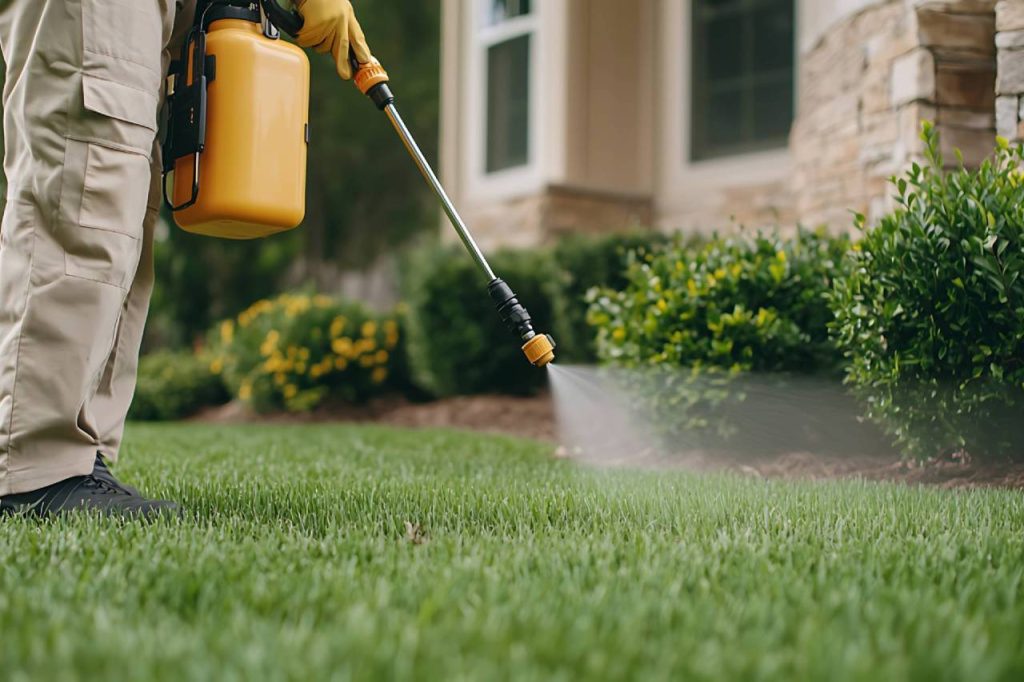
Spring is a race in Eastern Washington. Because summers become hot and dry very quickly, lawns need a strong, healthy root system established by May.
When lawn pest control methods are overlooked in March and April, pests get a head start to feast on tender new growth.
Early detection is the difference between a simple spot treatment and a total lawn renovation. By identifying activity now, you prevent exponential population growth that’s possible when the weather really gets warm.
Prevention is always more cost-effective and significantly less stressful than trying to resurrect a brown and brittle lawn that’s been plagued by garden pests.
Why Pests Become Active in Early Spring
As the ground thaws, the biology of your yard shifts. Several factors contribute to the sudden surge in pest activity in the early spring, including …
- Soil Warming: Most pests overwinter as larvae or eggs deep in the soil. As temperatures rise, they move toward the surface to feed on roots.
- Moisture Levels: The spring rains and start of irrigation give insections the hydration they need to thrive.
- Winter Stress: Lawns get “tired” after a cold winter. Wind and freezing temperatures weaken grass’ natural defenses, making it easier for early season lawn pests to gain a foothold.
- Dormancy Break: Just as your healthy grass begins to push out new shoots, pests are on the hunt for high-energy food sources. These tender young roots and blades are the perfect snack for a hungry insect population.
These conditions create a short window where common lawn pests can establish themselves before most homeowners notice a problem. Once feeding begins, damage can escalate quickly, especially if warming temperatures accelerate the pest life cycle.
Common Early-Season Lawn Pests in the Tri-Cities

To protect your property, you need to know the “usual suspects” in the Tri-Cities region. Here are the pests most likely to cause trouble in our local soil:
White Grubs
The most notorious of all subsurface pests, grubs are the larval stage of various beetles, such as Japanese Beetles or June Bugs.
- Appearance: They are C-shaped, milky-white bodies with brown heads.
- Damage: They feed on the roots of grass, severing the plant’s connection to water and nutrients.
- Signs: Your lawn may feel “spongy” underfoot, or you may notice patches of grass that can be rolled up like a piece of carpet.
Billbugs
Billbugs are a significant threat in the Tri-Cities, particularly in Kentucky Bluegrass lawns.
- Appearance: The larvae are small, white, and legless and look like a grain of rice, while adults are dark-colored weevils that have a distinctive “snout.”
- Damage: Larvae hollow out the grass stems, killing the plant from the inside out.
- Signs: Look for fine, sawdust-like material at the base of the grass blades. This is often confused with drought stress, but the grass will pull away easily if you tug it.
Sod Webworms
These are the caterpillars of small, buff-colored moths that fly in zigzag patterns across your lawn at dusk.
- Appearance: They are small and greenish-brown larvae with dark spots.
- Damage: They emerge from their silk-lined tunnels at night and clip off grass blades.
- Signs: There might be small brown patches that appear suddenly. You may also see “bird pecking” in these areas since birds hunt for the larvae.
Chinch Bugs
Chinch bugs are surface-feeding lawn pests that become more active as temperatures rise in late spring and early summer. While they are more common in warm climates, they can still appear in Tri-Cities lawns during hot, dry stretches.
- Appearance: Adult chinch bugs are small insects with black bodies and white wings folded over their backs. Young chinch bugs (nymphs) are reddish-orange with a white stripe and darken as they mature.
- Damage: These pests feed by sucking sap from grass blades and injecting toxins that block the plant’s ability to move water. This causes grass to dry out and die even when irrigation is adequate.
- Signs: Look for irregular yellow or brown patches that resemble drought stress. Damage typically appears in sunny areas near sidewalks, driveways, or other heat-reflecting surfaces and may spread quickly during hot weather.
Ant Infestations
While ants (fire ants or normal) don’t usually eat grass, they tunnel in the ground, which can dry out roots and create unsightly mounds. In the Tri-Cities, large colonies can quickly take over parking strips and garden borders and even migrate toward the home, which often prompts a search for pest control services near me.
Signs Your Lawn May Have Pest Damage
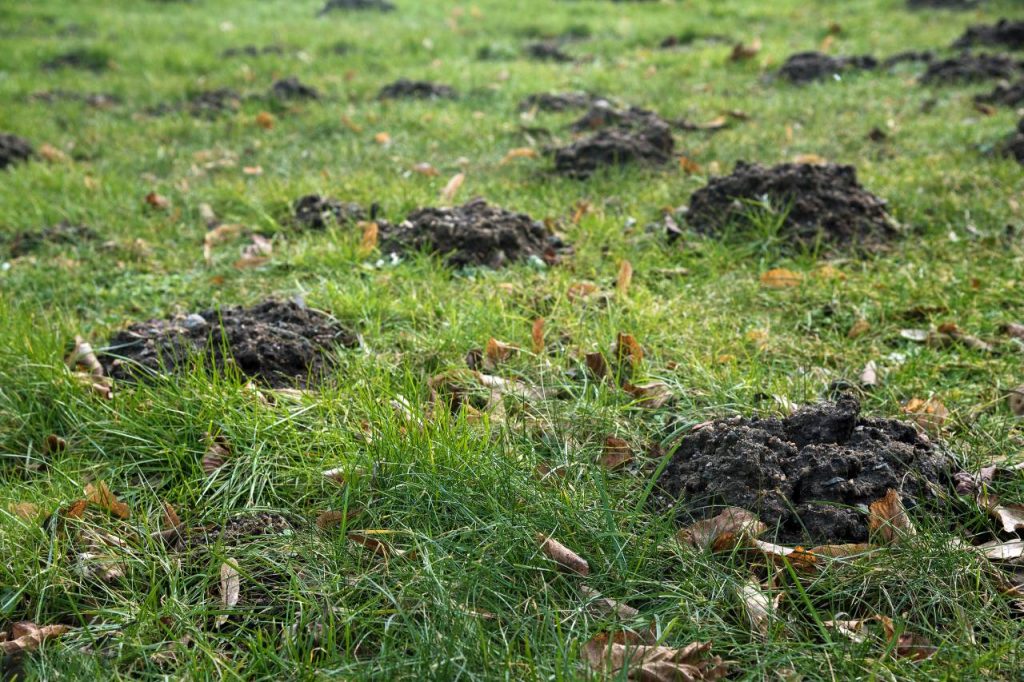
Knowing the signs of an infestation can save your lawn from total collapse. Keep an eye out for these red flags …
- Irregular Brown Patches: Pest damage often appears asymmetrical and spreads quickly.
- Spongy Turf: If the ground feels “bouncy” or loose,, something may be tunneling underneath.
- Increased Animal Activity: Crows, starlings, skunks, and raccoons digging in your yard are often hunting for a high-protein grub dinner.
- The “Tug Test”: If you grab a handful of brown grass and it pulls up effortlessly without any roots, a root-feeding pest is likely hard at work.
If you notice one or more of these warning signs, it’s worth taking a closer look at what’s happening below the surface.
Take a moment to inspect affected areas by gently pulling back a small section of turf or checking the top few inches of soil for grubs or larvae. Catching the problem early allows you to address the infestation before it spreads across larger portions of the lawn.
Preventative Lawn Pest Control Strategies
A proactive approach is the best defense against early season lawn pests. Building a resilient lawn makes it much harder for insects to cause significant damage.
Here are some effective preventative methods for a pest-free lawn …
- Routine Inspections: Walk your lawn once a week looking for changes in color or texture.
- Soil Health: Proper fertilization provides the nutrients grass needs to outgrow minor pest damage. A healthy root system can withstand a few nibbles.
- Proper Irrigation: Overwatering can attract certain pests such as Crane Flies, while underwatering stresses the grass and makes it vulnerable. Deep yet infrequent watering encourages deep roots.
- Thatch Management: Excessive thatch provides a perfect hiding spot and nursery for pests such as Sod Webworms. Aeration in the spring can help break this down.
Integrating these habits with professional lawn pest control is the best way to make sure your yard is monitored. Even better, it will be assessed by experts who know exactly what to look for in the Tri-Cities environment.
When to Call Professional Pest Control Services

Many homeowners attempt a DIY approach, but lawn chemistry is complex. Consider searching for pest control services near you and calling in the pros if …
- Damage is Spreading Rapidly: If a small brown spot becomes a large dead grass zone in less than a week, you may need an industrial-strength solution.
- Identification is Uncertain: Using a grub-specific treatment on a billbug infestation is ineffective. Professionals can accurately diagnose the specific pest, and cater a treatment to them.
- DIY Treatments Fail: Over-the-counter products are often less concentrated or suggest application at the wrong point in the pest’s life cycle, leading to ineffective results.
- Safety and Precision: Professionals use calibrated equipment to make sure the right amount of product is used, protecting your family, pets, and the local environment.
Adding a professional assessment early can prevent a small pest issue from turning into widespread lawn damage. Local pest control specialists understand how regional soil conditions, irrigation patterns, and seasonal weather influence pest activity.
In the Tri-Cities, where hot summers and dry conditions can already stress turf, a targeted treatment plan can make a noticeable difference. A trained technician can confirm the pest species, determine the stage of infestation, and apply treatments at the right time to stop the problem before it spreads further.
Long-Term Lawn Health and Pest Resistance
The goal of any high-quality lawn pest control program isn’t just to kill bugs; it’s to create an ecosystem where it’s hard for them to thrive.
A structured lawn care program focuses on preventative vs. reactive care. Applying systemic treatments at the right time creates a “shield” that lasts all season.
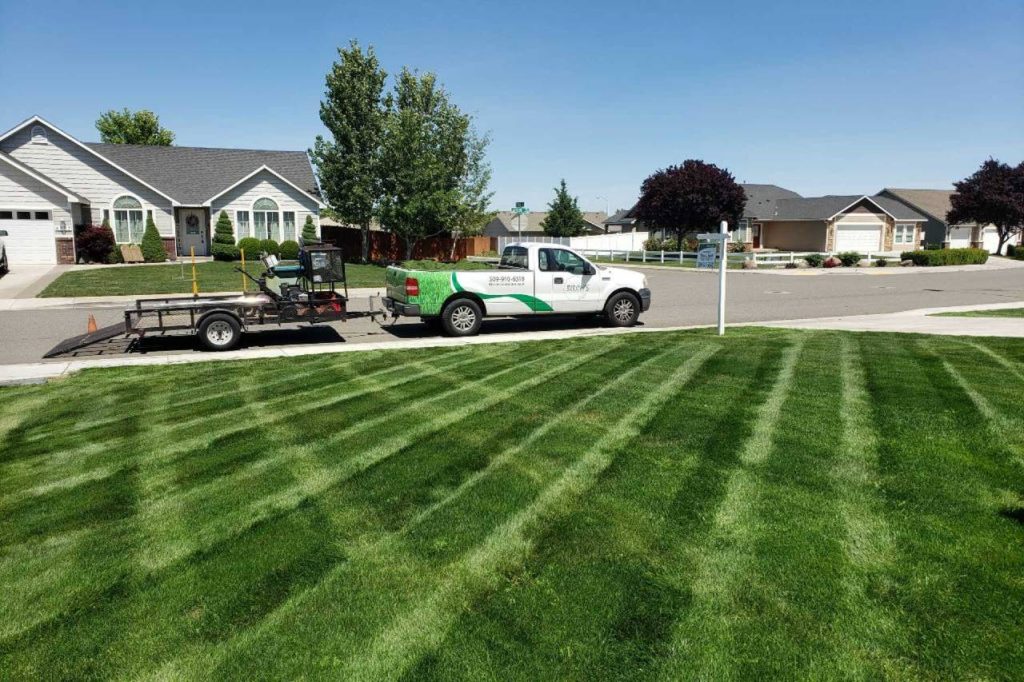
This is much more effective than trying to kill mature pests once the damage is already visible. Furthermore, routine lawn treatments strengthen the turf’s density, leaving no room for opportunistic pests or weeds to move in.
Keep Your Tri-Cities Lawn Healthy This Season
Your lawn is an investment in your home’s curb appeal and property value, and your family’s outdoor memories. Don’t let early season lawn pests dictate the health of your yard this year.
By staying vigilant in the early spring months and understanding our Tri-Cities climate, you can enjoy a lush, green landscape all through the scorching summer heat.
Eager to get ahead of the bugs? Schedule a spring lawn inspection with Birch’s Lawn Care to identify early season lawn pests and protect your yard before damage spreads.We know the Tri-Cities soil, and we know how to keep it healthy. Contact us today for a free estimate.