
A fresh round of fertilizer in early spring should set your lawn up for a strong growing season. You water it in, watch the weather, and expect greener grass within weeks.
However, sometimes, those results never show up. Even worse, your lawn develops patchy, thinning areas despite your efforts.
In many cases, the missing piece isn’t the fertilizer. It’s what’s happening beneath the surface.
Lawn pests and insects can disrupt root systems, weaken grass blades, and limit how your lawn absorbs nutrients. Without proper lawn pest control, even the best fertilizer program can fall short.
Let’s break down how lawn pest damage interferes with fertilization services, and what you can do to protect your investment.
Common Spring Lawn Pests to Watch For

Spring is when many lawn pests become active again after winter dormancy. These insects begin feeding, reproducing, and laying eggs, often before homeowners notice a pest problem developing.
Some of the most common lawn pests in the Tri-Cities area include:
- Grubs – Feed on grass roots, cutting off nutrient uptake
- Chinch bugs – Attack grass blades and suck out moisture, causing yellow or brown patches
- Armyworms – Rapidly chew through grass, leaving visible lawn pest damage
- Billbugs – Larvae feed inside grass stems, weakening the entire plant
- Sod webworms – Feed at night, damaging grass and leaving behind thin areas
You may also notice ants building ant mounds throughout your yard. While ants don’t always cause direct grass damage, large colonies can disrupt soil structure and invite other insects.
In some cases, aggressive species like fire ants can create additional issues for outdoor spaces and pets. The Washington State Department of Health has warned residents about European Fire Ants, which can cause mild allergic reactions in most cases and anaphylactic shock in others.
Mosquitoes, ticks, and other insects are also commonly found in yards with standing water or dense grass, contributing to a broader pest-control concern beyond turf health.
In fact, Trios Health has reported that in many northern or temperate regions, such as Kennewick, recent years have seen a rise in mosquito-borne illnesses that could affect residents. Protecting your lawn from pests could also mean protecting your family’s health and wellness.
How Lawn Pest Damage Disrupts Fertilizer Effectiveness
Fertilizer works by delivering nutrients through the soil to your lawn’s root system. When pests interfere with those roots, or the grass blades themselves, the entire process breaks down.
1. Root Damage Limits Nutrient Uptake
Grubs and similar insects feed directly on roots, preventing your lawn from absorbing water and nutrients. Even if you apply fertilizer correctly, the grass simply can’t take it in.
2. Damaged Grass Can’t Grow Properly
Surface-feeding pests like chinch bugs weaken grass blades, making it harder for the lawn to photosynthesize and recover. This leads to slow growth and may even visibly destroy parts of your lawn.
3. Patchy Results Despite Fertilization
You might notice green areas next to brown patches. This inconsistency is often a sign of a pest problem rather than a fertilizer issue.
In short, without proper insect control, your lawn isn’t able to fully benefit from the nutrients you’re applying.
Signs of Lawn Pest Damage vs. Other Lawn Issues

Not all lawn problems come from pests, so it’s helpful to know what to look for. Let’s talk about what to watch for in early-season lawn pests.
Signs of Lawn Pest Damage:
- Grass pulls up easily from the soil (root damage)
- Irregular brown or yellow patches
- Increased activity from birds (they’re feeding on grubs)
- Visible bugs or ant mounds in the yard
Signs of Other Issues:
- Drought stress – Grass turns grayish and brittle
- Disease – Circular or spreading patterns with fungal signs
- Nutrient deficiency – Uniform discoloration across the lawn
Correct identification is highly important. Treating the wrong issue can quickly waste your time, money, and effort.
Why Timing Matters in Washington’s Spring
Early spring is one of the most critical windows for both fertilization and pest control service. This is when many lawn pests begin to emerge and lay eggs, setting the stage for larger infestations in late spring and summer.
If you wait until visible damage appears, much of the most damage has already been done.
By pairing fertilization with lawn pest control early in the growing season, you can:
- Stop pests before populations grow
- Protect developing roots
- Support stronger, more resilient grass
This proactive approach helps your lawn perform better throughout the entire season, including late summer and early fall when stress levels increase.
How Integrated Pest Management Supports Lawn Health
Integrated pest management (IPM) is a balanced approach that combines monitoring, prevention, and targeted treatments to control pests while protecting your lawn and garden.
Rather than relying on constant blanket spray applications, IPM focuses on:
- Identifying the specific pest problem
- Using lawn safe treatments only when needed
- Encouraging beneficial insects that naturally deter insects
- Reducing conditions that attract pests (like standing water)
This approach supports long-term lawn health while minimizing unnecessary chemical use. It also helps protect pets and spaces outside your house where your family spends time in nature.
The Benefits of Professional Lawn Pest Control Services
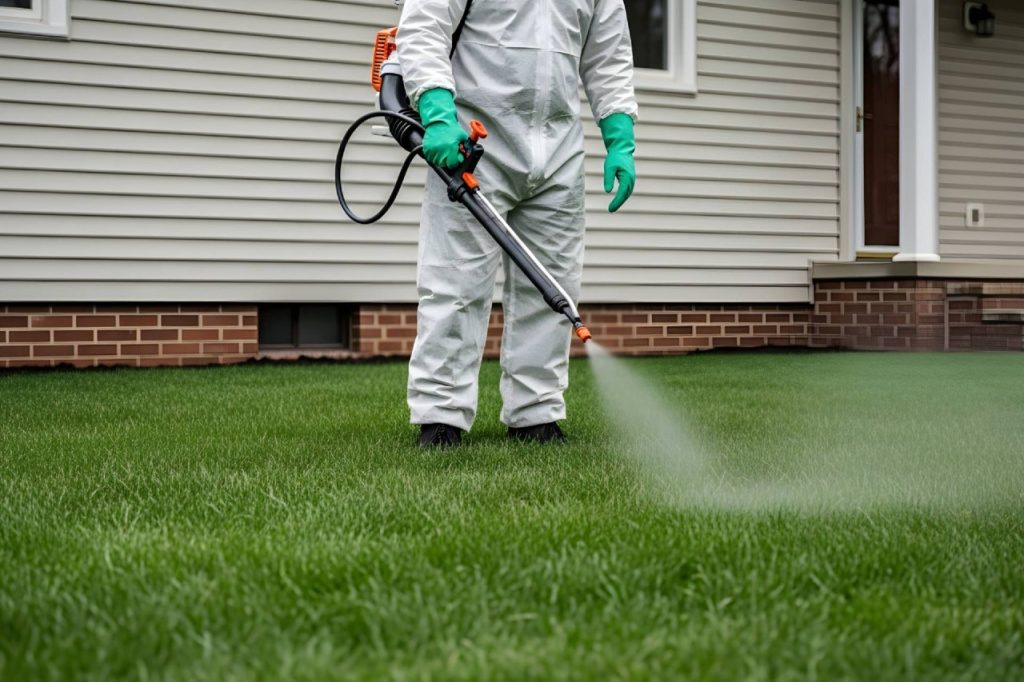
While DIY methods can help with minor issues, a recurring pest problem often requires professional pest control.
A professional lawn pest control service can:
- Accurately identify pests commonly found in your region
- Apply targeted insect control treatments at the right time
- Monitor your lawn throughout the growing season
- Treat and control ants, ticks, mosquitoes, and other insects affecting your yard
- Recommend strategies to protect your lawn from future outbreaks
Professionals in Washington also understand how pest control interacts with fertilization, weed control, and overall lawn care, giving you a more complete solution. Considering that the mosquito population hit a ten-year high last year, now is the time to start preparing for this next summer.
Preventive Strategies to Protect Your Lawn Investment
If you want to get the most out of your fertilizer, prevention is just as valuable as treatment.
Here are a few simple ways to protect your lawn:
- Address pest or insect issues early in the season
- Reduce standing water to limit mosquitoes and insects
- Keep the grass at the proper height to discourage bugs and rodents
- Break up ant mounds and monitor for ants regularly
- Maintain a balanced fertilization and weed control program
- Use targeted pesticide spray treatments when necessary
These steps help create an environment where insects and other pests are less likely to thrive on your Tri-Cities property.
A Smarter Approach to Lawn Care and Insect Control in the Tri-Cities

At Birch’s Lawn Care, we take a comprehensive approach that goes beyond basic fertilization to protect your lawn and your loved ones.
Our lawn pest control programs combine:
- Lawn pest control
- Seasonal fertilization
- Weed control
- Targeted insect control treatments
This integrated strategy helps your lawn absorb nutrients more efficiently, stay resilient against pests and insects, and reap the best results throughout the growing season.
Whether you’re dealing with invading chinch bugs, ants, beetles, spiders, roaches, wasps, mosquitoes, or a broader pest control issue, we help you eliminate the root cause, rather than just the symptoms.
Protect Your Fertilizer Investment with Professional Lawn Pest Control
If your lawn in Kennewick, Pasco, or Richland isn’t responding the way you expected, pest control may be the missing link you need to think about this spring. Protect your fertilizer investment with essential lawn pest control! Contact Birch’s Lawn Care today to schedule a lawn assessment and learn exactly how our integrated approach delivers the lush, healthy lawn you’ve always wanted.