
Most people think of their yard as a summer project. It looks great in June, starts fading in August, and by November, it’s basically a forgotten patch of land covered in leaves.
Come spring, and the cycle starts again.
Unfortunately, grass doesn’t work on a part-time schedule. Your yard is always reacting to heat, cold, rain, foot traffic, dry air, compacted soil, or something else entirely. Even when it looks like nothing is happening, things are still going on under the surface.
A consistent approach to lawn care maintenance does far more than an occasional burst of effort.
In a place like the Tri-Cities, the weather can be unpredictable. One month you’re dealing with frost, the next it’s blazing hot and dry. The constant shift puts stress on your turf. Year-round lawn care keeps your grass strong enough to handle it, instead of breaking down little by little.
Let’s take a closer look at what homeowners can realistically expect from professional lawn care and maintenance through each season of the year.
The Importance of Year-Round Lawn Care
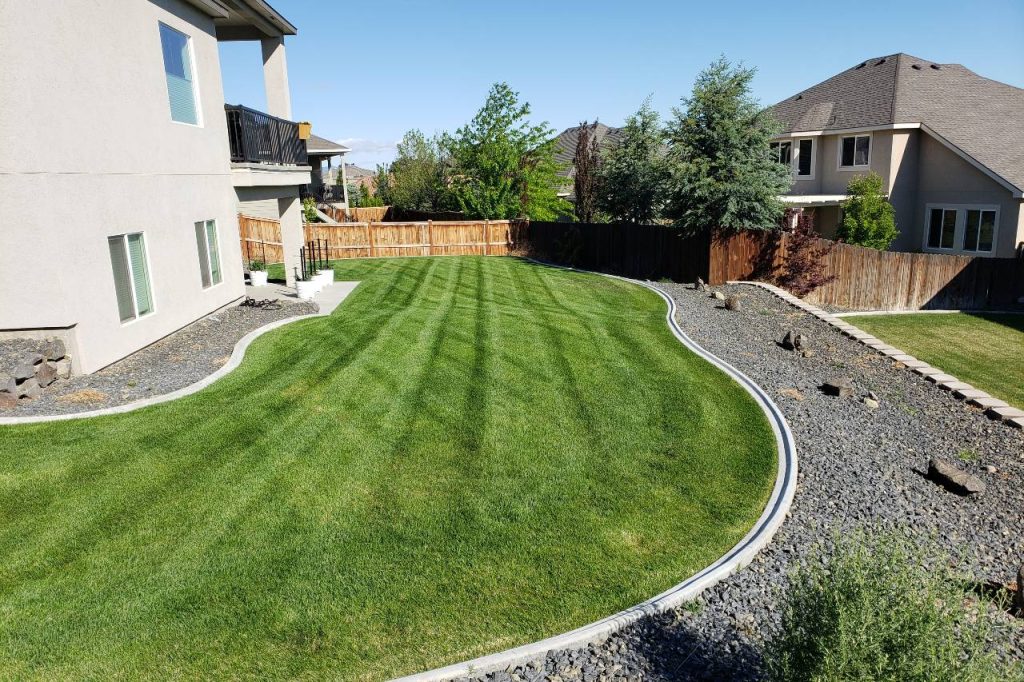
Grass is a living system made up of roots, soil, water, and nutrients working together. When one of those gets out of balance, the whole lawn starts to struggle.
Every season puts its own kind of pressure on your yard.
- Cold weather slows growth and can damage roots
- Spring rain tends to cause runoff and compact the soil
- Summer heat burns and weakens the grass
- Fall debris can suffocate healthy turf
As much as we’d like these issues to disappear on their own, they don’t. You’ll see weeds creeping in, bare patches spreading, and the soil hardening drastically. By the time it looks bad enough to fix, it’s usually a bigger, more expensive job than it needed to be.
With regular lawn care maintenance, your yard stays healthier, more balanced, and better prepared for whatever the next season brings.
Spring Lawn Care: Cleaning Up and Starting Fresh
Spring is your lawn’s wake-up call after a long, rough winter. However, while the weather may warm up, the yard doesn’t magically bounce back on its own. Between compacted soil and clumps of old grass, there are bits of winter still hanging around.
How you treat your lawn in spring sets the tone for the rest of the year.
Dethatching
Over the colder months, dead grass and organic buildup form a tight layer on top of the soil. It blocks sunlight, water, and nutrients from getting where they need to go. Clearing it out opens things back up, so the lawn can finally breathe again.
Aeration
After winter, the soil is usually dense and compacted. Aeration punches small holes in the ground to let air and water reach the grass’s roots.
Fertilization
Spring feeding gives your grass the jump-start it needs. The right nutrients help it grow thicker, greener, and stronger before the stress of summer kicks in.
Overseeding
Patchy or thin areas from last season can be filled in now. Doing this early helps even out the lawn and makes it harder for weeds to take over.
Pre-Emergent Weed Control
The best time to deal with weeds is before you ever see them. Preventative treatments stop many of them in their tracks and save you bigger headaches later in the season.
Summer Lawn Care: Keeping It Alive and Thriving

Summer looks beautiful in photos, but it’s survival season for your lawn.
Heat, dry air, foot traffic, and strict watering schedules make it easy for grass to get stressed out. You’ll have to be extra careful with your lawn care maintenance during this time.
Consistent Mowing
It’s tempting to cut the grass short so it “lasts longer.” However, in summer, shorter isn’t better. Keep your grass at a good height to protect the soil and help your lawn hold moisture.
Water Checks
Watering in summer is a balancing act. Too much, and you invite shallow roots and fungal problems. Too little, and the grass dries out, turns brown, and goes dormant or dies.
A big part of summer lawn care maintenance is making sure your yard gets the right amount of water, at the right time, in the right way. Focus on:
- Deep, steady soaks
- Morning watering
According to the EPA’s WaterSense landscaping guide, watering early in the day and avoiding overwatering are two of the easiest ways to save water and support healthier roots.
You also want to watch for runoff and pooling. Both indicate the soil isn’t absorbing water the way it should.
Heat Stress Monitoring
Summer stress doesn’t always show up as a big, obvious dead patch right away. You’ll usually notice smaller warning signs first. Watch for color changes, uneven growth, thinning areas, or grass that doesn’t bounce back after being walked on.
As part of summer lawn care maintenance, you can catch these issues early and step in before they spread. Quick adjustments to watering, mowing height, and targeted treatments help your grass recover faster and avoid lasting damage during the hottest part of the year.
Targeted Weed Control
Weeds love summer. Warm soil, open patches, and regular watering create the perfect setup for them to move in. Even if your lawn is in good shape, it’s normal to see a few, especially after mowing, watering, or heavy foot traffic.
Spot treatments during routine lawn care maintenance stop weeds before they spread and compete with your grass for water and nutrients. The quicker you act, the easier it is to stay ahead.
Traffic and Surface Care
Kids running barefoot and dogs doing laps along the fence line are part of backyard life, but they put incredible pressure on the soil. With time, these high-traffic areas start to pack down and thin out. Ongoing lawn care helps loosen things up, strengthen weak spots, and give the grass a better chance to bounce back between play sessions.
Fall Lawn Care: Repairing and Preparing

Many homeowners mentally check out in fall. The weather cools down and it feels like the hard part is over.
In reality, fall is one of the most valuable times for lawn care maintenance. Your grass uses this time to repair itself and store strength for winter.
Leaf Cleanup
Piles of fallen leaves can block sunlight and trap moisture to create the perfect environment for mold and disease. Clearing them away gives the grass the light and airflow it needs to stay healthy.
Aeration (Again)
Yes, again. Fall aeration is just as important as spring. Loosening up the soil now gives roots better access to nutrients in the colder months.
Fertilization
A fall feeding supports root growth without pushing a bunch of new top growth. Think of it as helping the lawn store up energy, so it can bounce back stronger in the spring.
Final Overseeding
Still seeing thin or damaged spots from the summer? Fall’s cool temperatures and steady moisture make it a great time to get new grass growing.
Winter Lawn Care: Uneventful, But Still Important
Winter isn’t the season most people think of for lawn care. Your grass isn’t growing much, and let’s be honest, no one’s rushing outside when it’s freezing.
Still, just because your yard looks inactive doesn’t mean it’s off the hook. Snow, pooling water, broken branches, and cold-weather fungus can quietly mess things up and leave you with a surprise project in spring.
Here’s what winter lawn care maintenance usually involves:
- Clearing fallen branches and debris that could smother the grass
- Watching for drainage issues or standing water
- Checking for signs of mold, fungus, or frost damage
- Identifying problem spots that may need early spring repair
- Mapping out the first treatments for the new season
Winter is less about doing and more about protecting and planning. Although it may be a slower time for your yard, skipping it can lead to bigger problems down the line.
The Real Benefits of Year-Round Maintenance
Sure, having the best-looking lawn on the block is nice. Consistent lawn care maintenance, though, does more than just boost curb appeal.
You can expect:
- Thicker, greener, and more resilient grass growth
- Stronger roots that survive heat waves and dry spells
- Fewer weeds, pests, and random bare spots
- Less money dumped into emergency patch-ups
- Better drainage and healthier, easier-to-manage soil
- A good-looking front yard year-round
- Less time spent doing yard work on your weekend off.
In short, regular lawn care is like insurance for your lawn: only cheaper, easier, and more satisfying.
Why Birch’s Lawn Care Makes a Difference

Tri-Cities lawns don’t behave like everyone else’s. Given the random temperature swings and variety of soil types in the area, your yard needs more than a cookie-cutter maintenance checklist.
At Birch’s Lawn Care & Landscaping, we’ve been tending to Tri-Cities’ lawns for decades. Our team knows exactly how local lawns react to frost, heat waves, and everything in between. Your yard gets what it needs at the right time.
We run our schedule like clockwork and tell you what we’re doing to your yard as we’re doing it. You don’t have to lift a finger. Just sit back and let our lawn care company take care of it.
Contact Birch’s Lawn Care for Year-Round Lawn Maintenance!
Your grass doesn’t take the winter off, and it definitely doesn’t recover from summer stress on its own. The healthiest yards don’t happen by accident. They’re the result of steady, well-timed care, season after season.
Of course, most people don’t always have the time, energy, or patience to stay on top of every treatment, mowing height, watering tweak, and seasonal tasks. Our lawn care services can help! If you’re ready for a yard that stays green, healthy, and low-maintenance all year long, getting started with Birch’s Lawn Care & Landscaping is easy. Reach out today, and let’s get your lawn moving in the right direction.