
As the cold weather creeps into the Tri-Cities of Washington (Kennewick, Pasco, and Richland), we see a sharp change for all local yards. Grass that looked lush in September starts to turn pale and patchy as the winter season approaches. If not handled properly before the freezing temperatures, it can potentially die off when spring comes around. Many homeowners notice, year after year, that lawns emerging from winter can look worse than they remember. The culprit usually lies in how the grass and soil were treated during late fall.
Preparation in the weeks leading up to winter affects how healthy your grass and soil will be for months to come. This transition period is short, but extremely crucial. Around October and November, soil temperatures cool, grass growth slows, and the season’s last few mowings, trimmings, and treatments can make all the difference when the weather warms up.

Let’s look at what makes late fall lawn care essential, the services that matter most in our local climate, and how small choices can set you up for a stronger, greener lawn next spring.
Introduction to Winter Lawn Preparation
Tri-Cities lawns face unique seasonal swings compared to other regions. By late November, daytime highs can drop as low as the mid-40s, while nights commonly freeze. These rapid temperature changes signal your grass to enter winter dormancy, a period when growth slows down but soil and roots remain active.
Late fall is the most important time to manage your lawn for the upcoming dormant season. The right preparation can protect against root damage, soil compaction, and common fungal problems that thrive in cold, wet conditions. These include:
- Red thread – A fungal disease that causes reddish or pinkish threads to form on grass blades, usually appearing during cool, damp conditions.
- Snow mold – Circular patches of matted, gray or pink grass that develop after snow melts, caused by prolonged snow cover and high moisture.
- Fusarium patch – Also called Microdochium patch, this disease creates small, water-soaked spots that turn brown and may merge, common in wet, cool weather.
- Dollar spots – Small, sunken, straw-colored patches about the size of a silver dollar, typically appearing in warm, humid conditions with low nitrogen levels.
For both homeowners and commercial property owners who prioritize a healthy lawn, handling these tasks now prevents time-consuming restorations later on when spring rolls around.
Why Lawn Care Before Winter is Non-Negotiable
Fall lawn care is about more than a tidy appearance.
Steps like fertilization, proper mowing, aeration, and equipment maintenance influence the survival and health of your lawn’s root system. Strong roots store food through winter and help grass “wake up” faster in spring.
Letting these tasks slide risks more than a few dead patches. Weakened grass is more likely to suffer from disease, erosion, and infestations from white grubs, slugs, sod worms, and more. When the soil is not properly prepared, roots can suffocate or freeze, leading to thin or brown lawns after the thaw.
Investing effort before winter secures all the hard work you do in the spring and summer.
Fall Lawn Care Services for Early Spring Growth and Disease Prevention
Pre-winter lawn services support your lawn’s immune system during its harshest months.
Grass enters a state of dormancy as temperatures drop in late fall and winter, slowing its above-ground growth to conserve energy.
During this period, the plant redirects resources to its root system, which remains active below the surface. Late-season fertilizer (typically high in potassium and phosphorus) plays a key role in this phase.
Potassium helps strengthen cell walls and improves the grass’s ability to withstand freezing temperatures and disease, while phosphorus fuels root development and energy storage. Nitrogen, applied in moderation, can also help maintain root metabolic activity without encouraging excessive blade growth.
When the soil contains sufficient nutrients, the roots can continue to grow, repair, and store carbohydrates, setting the stage for robust regrowth as soon as warmer temperatures return. This targeted nourishment enables a lawn to bounce back quickly in early spring, rather than lagging behind with weak, shallow roots.
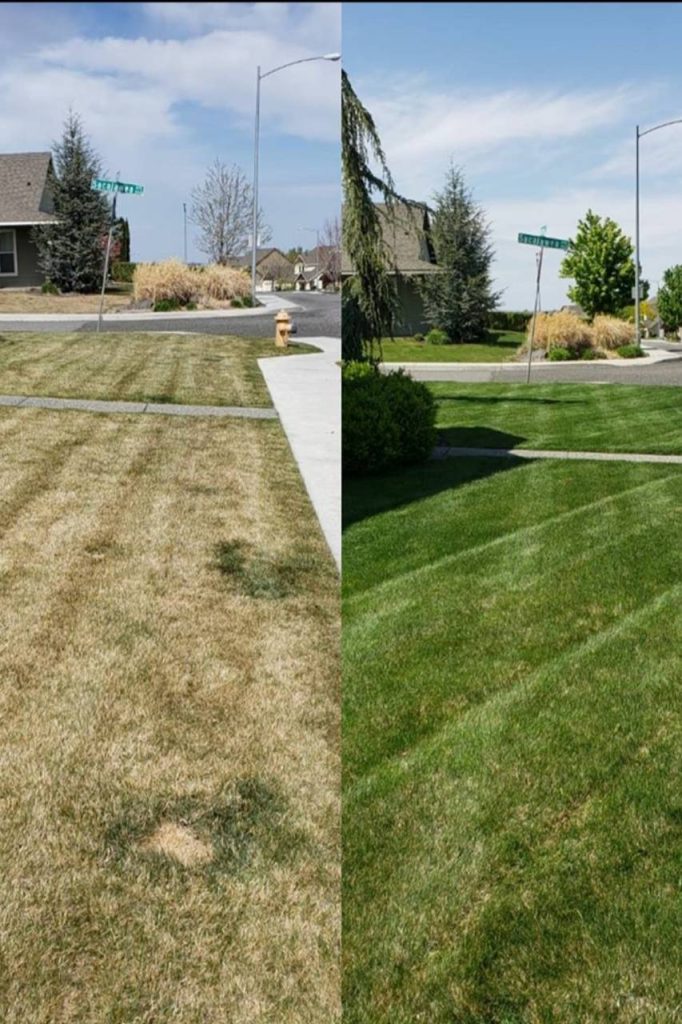
Key Fall Season Lawn Services
There are many fall lawn care services needed to keep your yard healthy throughout the winter. Here is how each value works in local yards across the Tri-Cities.
Aeration
Aeration, or poking small holes throughout the lawn, works to reduce soil compaction and helps nutrients, water, and air reach the root zone. Clay-heavy soils (common in much of the Tri-Cities) make this even more important.
We recommend scheduling lawn care services for aeration in late September or early October for the best results.
Fall Fertilizer Application
A final application of fertilizer in October/November helps strengthen root systems and prepare them for the winter.
According to a report by Illinois State University, the ideal fertilizer formula is rich in potassium and low in nitrogen to avoid promoting top growth when the grass is heading into dormancy. Our lawn care professionals use slow-release blends designed for cooler climates.
Leaf and Fall Weeds Clean Up
Leaves left on the lawn block sunlight and trap moisture, which is an open invitation for fungus and can smother grass. Routine mulching or raking prevents bare spots and unhealthy conditions. We recommend that leaves be removed at least every one to two weeks, especially after windstorms, which are common in the Tri-Cities during fall.
When we provide lawn care services in the fall, leaf cleanup is our first order of business.
Mowing Adjustments
Cutting the grass slightly shorter for the last mow of the season (about two to three inches high) can do a lot to limit snow mold and allow sunlight to reach the crown. Do not scalp the lawn, as cutting too short can weaken the grass for winter.
Irrigation System Shut-Offs (Sprinkler Blowouts)
Freezing temperatures and water lines can cause serious (and expensive) trouble. As freezing nights set in, any lingering water inside pipes wreaks havoc on your sprinkler system. Winterizing with a blowout, using compressed air to clear the lines, prevents costly breaks or leaks, making sure your system is ready to go when the temperatures warm back up.
Common Mistakes Homeowners Make in Their Fall Lawn Care Routine

Across Kennewick, Pasco, and Richland, we tend to see a few recurring errors homeowners make before winter hits, making lawn care services more costly in the spring.
Mowing Too Short
While it is recommended to lower your mowing height for the final cut, scalping the lawn (mowing to the soil) leaves the grass vulnerable to stress and disease. A common rule of thumb is never to remove more than one-third of the grass blade at a time, even on the last mow.
Skipping Fall Fertilization
A lack of fall nutrients means roots go into dormancy weak and undernourished. While it may not seem urgent, skipping late fall fertilizer is aleading cause of thin or slow-growing grass in spring, according to a study by Ohio State University. Without these nutrients, your lawn is also more susceptible to winter diseases, root damage, and weed invasion, making recovery in spring slower and less lush overall.
Ignoring Leaf Buildup
It can be tempting to wait for all the leaves to fall before cleaning them up, but thick layers can suffocate your grass. Clean them up regularly as trees shed leaves throughout the fall, and consider mulching lighter layers with a mower for easy recycling of nutrients.
Forgetting to Winterize Sprinklers
If you leave sprinkler systems full or partially drained, even a single frosty night can cause pipes to burst. Using the right tools (like an air compressor) for a full blowout guarantees protection. Many local suppliers rent out air compressors for this purpose.
The Tri-Cities Climate Factor
Our region’s climate makes winter prep extra important.
Tri-Cities winters are marked by cold snaps, occasional snow, and (unlike western Washington) long periods of dry air and soil. Nights can fall below freezing as early as late October, even if daytime temperatures feel mild. Lower humidity means less protection from freeze damage, especially for exposed roots and irrigation systems.
The growing season usually runs longer in this part of Washington, meaning grass and shrubs can remain active into November. Missing the window for fall tasks could mean working with frozen ground or waiting until spring, when underlying damage is much harder to fix.
According to the National Weather Service, the Tri-Cities get an average of 12 to 18 inches of snow each winter, which can create heavy runoff and further stress unprepared lawns.
Benefits of Professional Lawn Care Services
Enlisting help from experts can take the guesswork out of winter prep. Local professionals know the soil types, most common grass varieties (such as Kentucky bluegrass and perennial rye), and seasonal weather shifts in this area.
They also understand the ideal order and timing for each task, which ensures the best lasting results.
Timing, Tools, and Consistency
A professional crew uses the right tools and schedules aeration, fertilization, and irrigation shut-offs at the correct times. Consistency is key; skipping or delaying just one service can set back a lawn’s progress by months.
For busy property owners, commercial managers, or homeowners with larger spaces, relying on a systematic approach prevents small oversights from causing large problems.
Frequently Asked Questions About Pre-Winter Lawn Care

What is the best thing to put on your lawn before winter?
Applying a winterizer fertilizer is the best thing you can do for your lawn before the cold weather hits. This type of fertilizer is high in potassium, which helps strengthen grass roots and improve cold tolerance. It prepares your lawn to survive harsh winter conditions and encourages healthy growth when spring arrives.
When should I book lawn care services before winter?
It’s recommended to book lawn care services at least four to six weeks before the first expected frost. This gives professionals enough time to apply treatments like aeration, overseeding, and winterizer fertilizer. Early scheduling ensures your lawn gets the best care and protection ahead of colder weather.
When should you fertilize your lawn before winter?
Fertilize your lawn in late fall, about two to three weeks before the ground freezes. This timing allows the grass to absorb nutrients and build strong roots for winter. Applying fertilizer at this stage helps ensure your lawn remains healthy and recovers quickly in spring.
Is winterizer fertilizer worth it?
Yes, winter fertilizer is definitely worth it. It provides essential nutrients, especially potassium, that help your lawn withstand cold temperatures and stress. Using winterizer promotes stronger root systems and grass seed, resulting in a healthier, greener lawn when spring arrives. It’s a smart investment in your lawn’s long-term health.
What is the first thing I should put on my lawn in the spring?
The first thing you should put on your lawn in the spring is a balanced, slow-release fertilizer. This provides essential nutrients to help with strong growth as your grass comes out of dormancy. Early spring fertilization helps jump-start healthy blades and roots for a lush, green lawn all season.
Get Proper Fall Lawn Care From Birch Lawn Care Today
Getting ready for winter is more than a box to check. Preparation now is a smart investment in long-term health, curb appeal, and easier maintenance. With the right plan and local expertise, the spring thaw can reveal a lawn that looks and feels better than ever.
Birch’s Lawn Care brings deep local experience to every project in Kennewick, Pasco, and Richland. Our team focuses on practical, proven methods tailored to the distinct climate and soil challenges of the Tri-Cities. For everything from aeration and fertilization to snow removal and sprinkler blowouts, we work diligently to deliver reliable results every time.Get your lawn ready for winter the right way. Contact Birch’s Lawn Care today to schedule your pre-winter lawn services and protect your yard for the season ahead.